Why is Solitary Confinement Used in Public Schools?

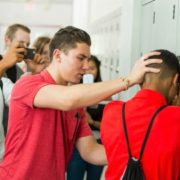
If parents were to lock their children in a confined space for a lengthy period of time, it is highly likely that those parents would be arrested for child abuse and their parental rights threatened. (In fact, this just happened in Arizona recently.) If public schools do this, however, the outcome is quite different.

The use of physical restraints, locked “seclusion rooms,” and solitary confinement for children is rampant throughout the nation’s public schools. In a comprehensive 2014 analysis by NPR and ProPublica, analysts found that “restraint and seclusion were used at least 267,000 times nationwide” in the 2011-2012 school year. Schools put children in seclusion rooms approximately 104,000 times in that one year. ProPublica reports that the restraint and seclusion practices included “pinning uncooperative children facedown on the floor, locking them in dark closets and tying them up with straps, handcuffs, bungee cords or even duct tape.”

Many school officials contend that using restraints and locked seclusion for children are sometimes necessary when children are out of control in the school building and need to calm down. But a 2014 U.S. Senate report on these practices argues that these extreme tactics are unnecessary and damaging to children.

The report asserts: “There is no evidence that physically restraining or putting children in unsupervised seclusion in the K-12 school system provides any educational or therapeutic benefit to a child. In fact, use of either seclusion or restraints in non-emergency situations poses significant physical and psychological danger to students.”

Particularly troubling is that the NPR/Pro Publica analysis of school seclusion and restraint practices found that the vast majority of the cases (75%) involved children with disabilities. In a separate analysis earlier this year, the Education Week Research Center found that 70,000 special education students were restrained or secluded in the 2013-2014 school year.

Beyond the obvious emotional trauma to a child of being physically restrained or locked in a secluded room, these restraint and seclusion practices sometimes result in serious injury. A 2012 ABC News investigation found that “thousands of autistic and disabled schoolchildren have been injured and dozens have died” from the use of seclusion and restraint protocols in the nation’s public schools.

Writing earlier this week in The Huffington Post, educator Laurie Levy shared a story of a small, first grade special education girl in her school district who was placed in locked seclusion, “crying hysterically for 45 minutes in what was euphemistically called the ‘Calm Down Room.’”

Levy goes on to write: “The closet had a panel window that permitted an adult to look in, but the window was blocked by taped-up paper from the floor to four feet from the ground and also at the top, so the child could not look out. This also made the closet rather dark. The child was repeatedly slapping the window with her hands but was not tall enough to see anything.”

Actions that are considered criminal when parents do them are somehow tolerated in the nation’s public schools. Locking children in dark closets or physically restraining them with ropes and ties can cause serious emotional trauma and bodily harm. Parents shouldn’t do it, and neither should the state.

—

[Image Credit: Paramount Pictures]

This post Solitary Confinement is Quite Common In Public Schools was originally published on Intellectual Takeout by Kerry McDonald.
What if School Was More Like Summer Camp?

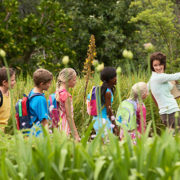
For many children, summer camp is transformational. Working collaboratively, mostly through play and hands-on experimentation, campers try new things, encounter new challenges, and meet new mentors and friends. They are often outside, exploring the world around them, with ample opportunities for freedom and self-expression. Then summer ends and they go back to school, confined in a classroom for most of the day, passively learning what others want them to know.

Some educators are challenging this divide between summer learning and fall schooling. Why, they ask, isn’t school more like camp?

In his book, The Art of Self-Directed Learning, author and educator Blake Boles writes:

“School taught me how to memorize a fact until Friday and alter the margins on an essay to create a higher page count; camp taught me how to figure out what I want, take the initiative, conquer my fears, own my victories, and learn from my failures. To my teenage sensibilities, the annual ratio of camp to school didn’t make sense. Why didn’t I go to camp most of the year and then head off to school for a couple months to learn grammar, algebra, and whatever else camp didn’t teach?”

Boles now spends his time trying to bridge the gap between the self-directed learning he experienced in summer camp with the prevailing forced schooling model. He works with teenagers outside of schooling to support their own passion-centered learning, or to reignite their self-directed learning senses that are often dulled at school. Through his Unschool Adventures program, Boles leads extensive, multi-week trips around the world for teenagers throughout the year. His goal of extending the benefits of summer camp past summer is being realized with hundreds of young people who learn by being fully immersed in the people, places, and things around them.

In Massachusetts, educators are also blurring the lines between summer camp learning and academic year schooling. At Parts & Crafts, a self-directed learning center just outside of Boston, summer camps with long waiting lists provide young people with the freedom to explore their own interests and passions, while helpful facilitators are available to assist.

Parts & Crafts, a community makerspace that encourages creativity and innovation through hands-on tinkering, building, and collaboration, continues its summer camp philosophy of self-directed learning throughout the academic year. It offers a schooling alternative program for local homeschoolers, as well as an after-school program, where young people are free to learn without coercion.

Away from the fetters of the standard compulsory schooling model, summer programming provides a glimpse of what education could be. A mix of public and private organizations, church-based groups, neighborhood co-ops, and family-focused arrangements combine to nurture and nourish children all season.

In summer, children have more opportunities for play and hands-on discovery, and become more active participants in their lives rather than passive onlookers. With interactive camps, engaging summer activities through local organizations, and closer connections with their own family members, it is no wonder that most young people would prefer not to go back to school come fall. Perhaps we should look more to summer for the solutions to our school-year woes, and challenge a system that puts more emphasis on containment than freedom.

–

This post What if School Was More Like Summer Camp? was originally published on Intellectual Takeout by Kerry McDonald.
“Back to School” Is Not Inevitable

The New York Times article on “6 Things Parents Should Know About Sending Kids Back To School” begins:

Surely there are some kids who are eager for school to start, but I have not met them. My 9-year-old and 5-year-old daughters have little interest now in trading day trips to the beach and family movie nights for an unfamiliar classroom and nightly homework.”

So don’t make them.

Our culture treats schooling as if it’s inevitable. Like death and taxes, it’s a necessary evil. Even if we know kids don’t want to return to school – are dragging their heels or are downright obstinate – we laugh it off. Everyone knows school stinks. You just have to hold your nose and jump.

For many progressive reformers, dating back to the days of John Dewey, the key is just to make schooling gentler. Spruce it up a bit, make it more engaging and relevant, paint the classroom walls a prettier color. Then it will be ok.

I don’t buy it. You can add curtains to the jail cells but it’s no less a prison.

Out-of-the-Box Education

I often have people say to me when I advocate for alternatives to school that we shouldn’t “throw the baby out with the bathwater.” There’s no need to do away with compulsory schooling, they say; we just need to reform what we’ve got. But progressive reformers have been trying this for decades with little impact, at least inside of the mass schooling monopoly. Not only have progressive reforms not worked, by most accounts mass schooling has become even more restrictive.

Within the context of a system of coercive schooling, created by 19th-century ideologues to bring order and compliance to the masses, there is no room for creativity, no palate for innovation. We need to look outside of standard schooling for education models that actually work. And we often need to look way outside for models that work and that retain children’s natural curiosity and exuberance for learning.

Schooling is the box. What does learning look like?

NorthStar, a self-directed learning center for teens in western Massachusetts, has a great motto: “Learning is Natural, School is Optional.” Schooling alternatives, like NorthStar, recognize that thinking out-of-the-box about education isn’t enough. You have to reject the box altogether and create an entirely new geometric shape. Schooling is the box. What does learning look like?

This process takes some imagination. Most of us have been schooled to believe that schooling is necessary, that learning is unpleasant, that all kids dread September and the daily confines of the classroom walls. That is Life, we are told. Suck it up. Because then someday you’ll have to be an Adult and spend your days in a job you hate with bosses you can’t stand in a confining, mind-numbing workplace that saps your soul. Get used to it.

We rarely question why. We rarely challenge the origins of mass schooling to cultivate such conformity, such hopelessness, such inevitability. It just is.

It Doesn’t Have to Be This Way

Schooling is one mode of education, but it is not the only one. There are other ways to learn, to know, to be educated. There are real models of education – that look nothing like school – that are wildly successful in nurturing children’s learning and development. Unschooling, democratic schooling, self-directed learning centers are just a few of the educational possibilities that reject the schooling box and create something entirely new.

As back-to-school time approaches and articles swarm on how to make the transition to September easier and more successful, maybe it’s worth pausing to ask: If something is so unpleasant for so many of us, why are we doing it?

Reprinted from Whole Family Learning.

This article was originally published on FEE.org. Read the original article.

Elementary School to Remove ‘Conformity’ Posters Amid Uproar

In case there was any ambiguity over the idea that mass schooling values and rewards conformity and compliance, an elementary school in Florida has made it very clear.

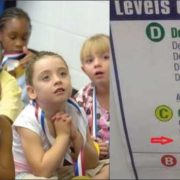
At Deer Park Elementary School in Pasco County, signs appeared this week showing a hierarchy of behaviors from good to bad. “Democracy” was at the top, “Anarchy” was at the bottom. While there are many issues with these posters, beginning with the fact that public schooling is far from democratic, the one causing the most outrage among parents is the desire for children to exhibit “Cooperation/Conformity.”

“Conform! How Orwellian,” one parent wrote on Facebook.

The posters, tied to the school’s “behavior and classroom culture” project modeled after author Marvin Marshall’s Raise Responsibility System of discipline, suggest that a young person who “complies” and “conforms” is a model student. Under relentless pressure from parents and student advocacy organizations, the school indicated they would temporarily remove the posters until they could better communicate their initiative to parents and the public.

These school posters explicitly reveal the troubling reality that mass schooling retains its 19th century roots as a system of social control. Originally designed to bring order to an increasingly diverse population, the industrial model of mass schooling continues to impose order by encouraging compliance, rewarding conformity, and eliminating individuality.

As author and academic, Noam Chomsky, says “the education system is supposed to train people to be obedient, conformist, not think too much, do what you’re told, stay passive…”

In educator John Holt’s bestselling book, How Children Learn, republished this month in honor of its 50th anniversary, Holt writes about the systematic ways schooling destroys children’s natural curiosity and originality:

“We like to say that we send children to school to teach them to think. What we do, all too often, is to teach them to think badly, to give up a natural and powerful way of thinking in favor of a method that does not work well for them and that we rarely use ourselves. Worse than that, we convince most of them that, at least in a school setting, or any situation where words or symbols or abstract thought are concerned, they can’t think at all.”

The elementary school posters in Florida are an overt reminder that schooling and learning are strikingly different. Children, especially those young elementary schoolers, have an incredible capacity for creativity, an inherent zest for exploration and discovery, and an insatiable appetite for learning about the world around them. Then they go to school where tactics that encourage conformity and compliance crush their natural learning instincts. At least these posters tell the truth.

Homeschoolers: The Enemy of Forced Schooling

I was born in 1977, the year John Holt launched the first-ever newsletter for homeschooling families, Growing Without Schooling. At that time, Holt became the unofficial leader of the nascent homeschooling movement, supporting parents in the process of removing their children from school even before the practice was fully legalized in all states by 1993. Today, his writing remains an inspiration for many of us who homeschool our children.

Mass schooling is, by its nature, compulsory and coercive.

Holt believed strongly in the self-educative capacity of all people, including young people. As a classroom teacher in private schools in both Colorado and Massachusetts, he witnessed first-hand the ways in which institutional schooling inhibits the natural process of learning.

Holt was especially concerned about the myriad of ways that schooling suppresses a child’s natural learning instincts by forcing the child to learn what the teacher wants him to know. Holt believed that parents and educators should support a child’s natural learning, not control it. He wrote in his 1976 book, Instead of Education:

“My concern is not to improve ‘education’ but to do away with it, to end the ugly and anti-human business of people-shaping and to allow and help people to shape themselves.”

Self-Determined Learning

Holt observed through his years of teaching, and recorded in his many books, that the deepest, most meaningful, most enduring learning is the kind of learning that is self-determined.

As “the enemy,” we homeschoolers reject the increasing grip of mass schooling.

One of his most influential books, originally published in 1967, is How Children Learn. This month, it was re-published in honor of its 50th anniversary, with a new Foreword by progressive educator and author, Deborah Meier. In her early days as an educator, Meier says, she was influenced by Holt’s work and was particularly drawn to his revelation that even supposedly “good schools” failed children through their coercive tactics. Meier writes in the Foreword: 

“While following Holt’s deep exploration of how children learn I therefore wasn’t surprised to discover Holt had joined ‘the enemy’—homeschoolers. His little magazine, Growing Without Schooling, was the most useful guide a teacher could ever read. As time passed I began to change my views of homeschooling. I’m still first and foremost working to preserve public education but homeschoolers can be our allies in devising what truly powerful schooling could be like. If we saw the child as an insatiable nonstop learner, we would create schools that made it as easy and natural to do so as it was for most of us before we first entered the schoolroom.”

Compulsory Education is Always Coercive

The trouble with Meier’s line of reasoning is that it presumes this is something schools can do. Mass schooling is, by its nature, compulsory and coercive. Supporting “an insatiable nonstop learner” within such a vast system of social control is nearly impossible.

Holt said so himself. In his later books, as he moved away from observations of conventional classrooms and toward “the enemy” of homeschoolers, Holt acknowledged that the compulsory nature of schooling prevented the type of natural learning he advocated. He writes in his popular 1981 book, Teach Your Own:

“At first I did not question the compulsory nature of schooling. But by 1968 or so I had come to feel strongly that the kinds of changes I wanted to see in schools, above all in the ways teachers related to students, could not happen as long as schools were compulsory

Holt continues:

“From many such experiences I began to see, in the early ‘70s, slowly and reluctantly, but ever more surely, that the movement for school reform was mostly a fad and an illusion. Very few people, inside the schools or out, were willing to support or even tolerate giving more freedom, choice, and self-direction to children….In short, it was becoming clear to me that the great majority of boring, regimented schools were doing exactly what they had always done and what most people wanted them to do. Teach children about Reality. Teach them that Life Is No Picnic. Teach them to Shut Up and Do What You’re Told.”

While progressive educators like Meier may have the best intentions and believe strongly that compulsory schools can be less coercive, the reality is quite different. Over the past half-century, mass schooling has become more restrictive and more consuming of a child’s day and year, beginning at ever-earlier ages. High-stakes testing and zero tolerance discipline policies heighten coercion, and taxpayer-funded after-school programming and universal pre-k classes often mean that children spend much of their childhood at school.

Compulsory schooling cannot nurture non-coercive, self-directed learning.

As “the enemy,” we homeschoolers reject the increasing grip of mass schooling and acknowledge what Holt came to realize: compulsory schooling cannot nurture non-coercive, self-directed learning. Holt writes in Teach Your Own: “Why do people take or keep their children out of school? Mostly for three reasons: they think that raising their children is their business not the government’s; they enjoy being with their children and watching and helping them learn, and don’t want to give that up to others; they want to keep them from being hurt, mentally, physically, and spiritually.” Today, those same reasons ring true for many homeschoolers.

It’s worth grabbing the anniversary copy of John Holt’s How Children Learn. His observations on the ways children naturally learn, and the ways most schools impede this learning, are timeless and insightful. But it is also worth remembering that Holt’s legacy is tied to the homeschooling movement and to supporting parents in moving away from a coercive model of schooling toward a self-directed model of learning. After all, Holt reminds us in Teach Your Own:

“What is most important and valuable about the home as a base for children’s growth in the world is not that it is a better school than the schools but that it isn’t a school at all.”

This article was originally published on FEE.org. Read the original article.

Do Children Really Need ‘More Rigorous’ Pre-Schools?

My grandmother taught kindergarten. In the ‘40s, before her own baby boomer children arrived, she spent weekday mornings singing ABCs and writing 123s with neighborhood children in the living room of her small suburban home.

Kindergarten back then was very different from today. For one, it was fun. For another, it was part-time and low-key. My grandmother’s kindergarten class was rooted in music, play, and movement, with a worksheet here and there, before the parents would scoop up their children before lunch for a wide-open afternoon. When I was little, she would play on her piano the sweet songs she once played for her kindergarteners. In her attic I played school with the leftover lesson plans I found buried deep in dusty bureau drawers.

When I went to kindergarten back in the ‘80s, it was still fun, still part-time, and still low-key. But as parents now, we are likely among the last generation to experience such a thing. Over the past several decades, kindergarten has become increasingly rigorous, increasingly pressure-filled, and increasingly long. In fact, the question now is not how demanding kindergarten should be, but how much should we expect of pre-kindergarteners.

According to a recent study published in the Journal of Applied Development Psychology, University of California at Berkeley researchers found that children in academically-oriented preschool programs performed better in kindergarten than children in less-rigorous pre-k programs. The researchers conclude that “for the average American child it’s encouraging to learn that academic-oriented preschool yields benefits that persist into the kindergarten year.” The benefits, however, were small and do not indicate what is sacrificed with a shift toward academic rigor in early childhood.

The timing of the study, summarized in a recent New York Times article, coincides with a push nationally for expanding universal, full-day, taxpayer-funded preschool programs. In New York City, for example, four-year-olds currently have access to full-day public preschool programs, and Mayor Bill de Blasio announced earlier this year that he plans to expand that program to the city’s three-year-olds.

Many researchers and parents, however, are not sold on this push toward pressure-cooker preschool and academically-focused kindergarten. They argue that tiny gains in academic performance don’t compensate for the loss in playtime and movement that children need for normal development. In a response to the UC-Berkeley study, Diane Levin, a professor of early childhood education at Wheelock College, asks: “How can one argue for giving up big chunks of playtime for academic teaching to make such minimal gains in academic performance—with little consideration of what other areas might have lost out because of the focus on academic skills.?”

Protecting preschoolers and kindergarteners from encroaching, play-deprived academics is the work of Defending the Early Years, a non-profit organization founded by Nancy Carlsson-Paige, an early childhood development researcher and author of Taking Back Childhood.

She states: “We have decades of research in child development and neuroscience that tell us that young children learn actively—they have to move, use their senses, get their hands on things, interact with other kids and teachers, create, invent. But in this twisted time, young children starting public pre-K at the age of 4 are expected to learn through ‘rigorous instruction.’ And never in my wildest dreams could I have imagined that we would have to defend children’s right to play.”

As formal schooling begins at ever-earlier ages and consumes increasingly more of a child’s day and year, preserving play and avoiding inappropriately rigorous early childhood education are becoming big challenges. Is pressure-cooker preschool the new normal, or is there still hope for a play-filled childhood?

—

This post Do Children Really Need ‘More Rigorous’ Pre-Schools? was originally published on Intellectual Takeout by Kerry McDonald.
Why is There So Much Bullying in Schools?

Imagine if, at your workplace, you were constantly harassed, humiliated, and even physically attacked. You would probably dread going to work and call in sick often to avoid it. You may talk to your boss or someone in HR to see if the problem could be fixed. If it couldn’t, you would quit. You may even file charges if you were physically harmed, or take out a restraining order against your perpetrators. You have recourse. You have options. You have choice.

Children who are bullied in school have very few choices and very little recourse. Required by law to attend an assigned public school, many children and their parents have minimal agency to withdraw from a bullying scenario. Some parents will look for alternative schooling options for their bullied children, like private schools, charter schools, online schools, or homeschooling. But for many families these choices are not available or accessible.

In those cases, bullied children must endure daily battering that would be criminal if inflicted on adults. Is it any wonder that we have a rising suicide rate among children? In fact, according to the CDC, the suicide rate among 10- to 14-year-olds has doubled since 2007.

Wounded By School author Kirsten Olson refers to bullying as “an expression of the shadow side of schooling.” She writes:

“If we create school systems in which compulsion, coercion, hierarchy, and fear of failure are central features of the academic experience, and essential to motivating and controlling students, then the energy from those negative experiences will seek expression.”

In other words, if people are placed in environments where they have little freedom and control, this can trigger bullying behaviors; and if those who are being bullied can’t freely leave, then hostility may continue indefinitely.

As Boston College psychology professor Dr. Peter Gray writes: “Bullying occurs regularly when people who have no political power and are ruled in top-down fashion by others are required by law or economic necessity to remain in that setting. It occurs regularly, for example, in prisons. Those who are bullied can’t escape, and they have no legislative or judicial power to confront the bullies.”

As another school year approaches, bookstore and library shelves are filling with titles aimed at “bully-proofing” children. Articles and blog posts share strategies on how to help students who are victims of bullying. School administrators and teachers develop policies, plans, and professional development programs for dealing with bullying. While well-intentioned, all of these efforts ignore the central problem: bullying exists due to a compulsory schooling environment that mandates attendance, eliminates freedom, and limits the ability to opt-out. Until that issue is addressed, no amount of reading, policymaking, teacher training, and “bully-proofing” is going to stop bullying from occurring.

The best way to avoid bullying in schools is to question compulsory attendance laws, expand education choice, and create learning environments that nurture childhood freedom and autonomy. After all, if we wouldn’t tolerate bullies in our lives, why should we ever expect our children to?

—

[Image Credit: By Elizabet21 (Own work) [CC BY-SA 4.0 (http://creativecommons.org/licenses/by-sa/4.0)], via Wikimedia Commons]

This post Why is There So Much Bullying in Schools? was originally published on Intellectual Takeout by Kerry McDonald.